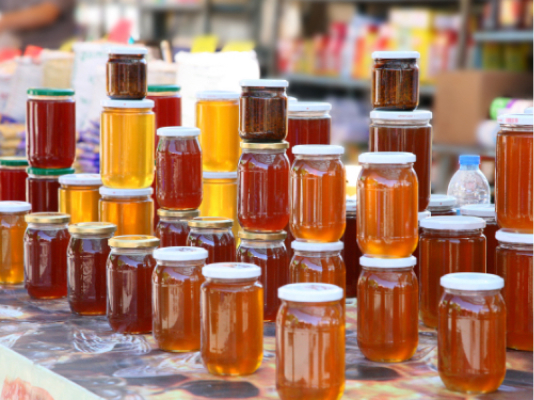
Have you ever noticed that honey can be a range of different colours from very light to very dark and many shades in between?
The colour of honey is mostly influenced by the type of flower from which the bee’s collect nectar from. Different flowers produce nectar with different colours and flavours, resulting in a wide range of honey colours.
Here in Australia some examples of lighter coloured honey include acacia, clover and orange honey. Some examples of darker coloured honey include banksia and buckwheat honey.
The availability of flowering plants also changes throughout the year based on the seasons, which means that honey harvested from one hive at different times of the year can be both a different colour and a different flavour.
Some types of honey, known as varietal honey, are made primarily from the nectar of a single type of flower; citrus being an example of this. These honeys often have very distinct colours and flavours characteristic of the flower from which the bees foraged.
In Australia, if you enter your honey into a show to get judged, there are typically 4 broad colour classes that honey gets categorised in. They are: light, amber, dark and golden.
Some other factors that can influence the colour of honey how the honey was processed (if heat is used it changes the colour of the honey) and how the honey was stored (over time exposure to light and heat can cause honey to darken).
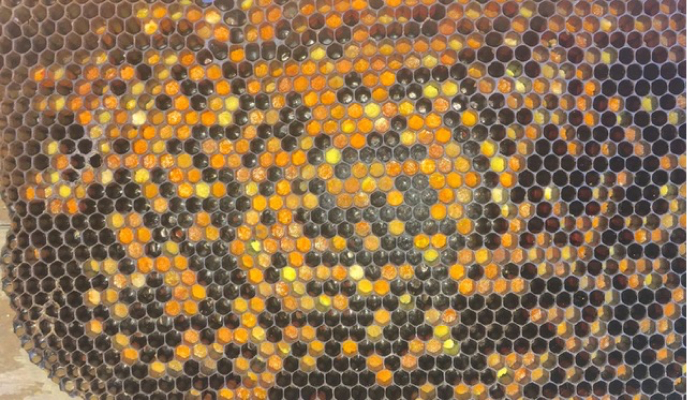
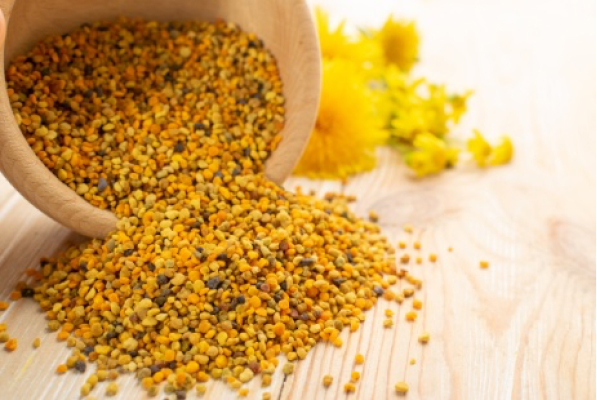
It’s worth mentioning that the same colour variations are found in the pollen collected by bees. The photo below left, shows the fresh pollen deposits made on the frame inside a hive, showing a number of different colours; and the photo beside it is what dried pollen looks like.
Two of my favourite brands of Australian bee pollen to buy are from Helio Hives and Eden Health Foods.